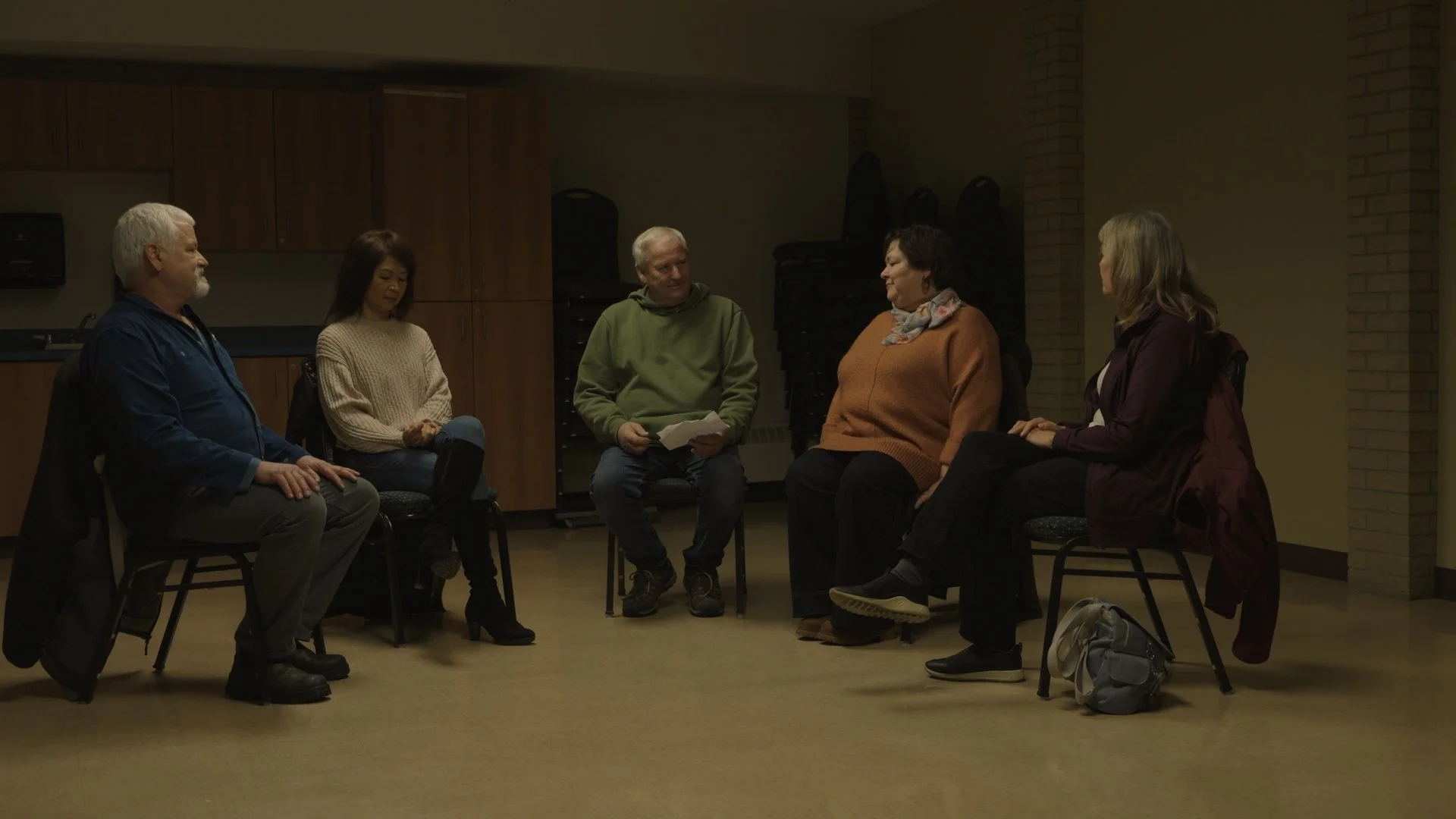
In Person Meeting
Most meetings begin with introductions and each survivor telling of their loss and updating the group on changes. New members as they are ready participate in sharing.
Often there is a topic to begin the group discussion for example a favourite memory of your loved one, managing emotions (anger). Meetings usually involve members own experiences, knowledge and ideas.
Police members are welcomed and will attend to offer support and to answer questions members have about investigations, procedures etc.
Guest speakers occasionally are invited to present and share at meetings.
Acceptance and support are important principles of group support. No one is there to judge your feelings or to persuade you to think differently. Members help each other by sharing their own experiences and insights and allowing others to do the same. No one is there to judge your loved one that has been murdered.

In Person Meeting
Most meetings begin with introductions and each survivor telling of their loss and updating the group on changes. New members as they are ready participate in sharing.
Often there is a topic to begin the group discussion for example a favourite memory of your loved one, managing emotions (anger). Meetings usually involve members own experiences, knowledge and ideas.
Police members are welcomed and will attend to offer support and to answer questions members have about investigations, procedures etc.
Guest speakers occasionally are invited to present and share at meetings.
Acceptance and support are important principles of group support. No one is there to judge your feelings or to persuade you to think differently. Members help each other by sharing their own experiences and insights and allowing others to do the same. No one is there to judge your loved one that has been murdered.
In Person Meeting
Most meetings begin with introductions and each survivor telling of their loss and updating the group on changes. New members as they are ready participate in sharing.
Often there is a topic to begin the group discussion for example a favourite memory of your loved one, managing emotions (anger). Meetings usually involve members own experiences, knowledge and ideas.
Police members are welcomed and will attend to offer support and to answer questions members have about investigations, procedures etc.
Guest speakers occasionally are invited to present and share at meetings.
Acceptance and support are important principles of group support. No one is there to judge your feelings or to persuade you to think differently. Members help each other by sharing their own experiences and insights and allowing others to do the same. No one is there to judge your loved one that has been murdered.
In Person Meeting
Most meetings begin with introductions and each survivor telling of their loss and updating the group on changes. New members as they are ready participate in sharing.
Often there is a topic to begin the group discussion for example a favourite memory of your loved one, managing emotions (anger). Meetings usually involve members own experiences, knowledge and ideas.
Police members are welcomed and will attend to offer support and to answer questions members have about investigations, procedures etc.
Guest speakers occasionally are invited to present and share at meetings.
Acceptance and support are important principles of group support. No one is there to judge your feelings or to persuade you to think differently. Members help each other by sharing their own experiences and insights and allowing others to do the same. No one is there to judge your loved one that has been murdered.
In Person Meeting
Most meetings begin with introductions and each survivor telling of their loss and updating the group on changes. New members as they are ready participate in sharing.
Often there is a topic to begin the group discussion for example a favourite memory of your loved one, managing emotions (anger). Meetings usually involve members own experiences, knowledge and ideas.
Police members are welcomed and will attend to offer support and to answer questions members have about investigations, procedures etc.
Guest speakers occasionally are invited to present and share at meetings.
Acceptance and support are important principles of group support. No one is there to judge your feelings or to persuade you to think differently. Members help each other by sharing their own experiences and insights and allowing others to do the same. No one is there to judge your loved one that has been murdered.
In Person Meeting
Most meetings begin with introductions and each survivor telling of their loss and updating the group on changes. New members as they are ready participate in sharing.
Often there is a topic to begin the group discussion for example a favourite memory of your loved one, managing emotions (anger). Meetings usually involve members own experiences, knowledge and ideas.
Police members are welcomed and will attend to offer support and to answer questions members have about investigations, procedures etc.
Guest speakers occasionally are invited to present and share at meetings.
Acceptance and support are important principles of group support. No one is there to judge your feelings or to persuade you to think differently. Members help each other by sharing their own experiences and insights and allowing others to do the same. No one is there to judge your loved one that has been murdered.
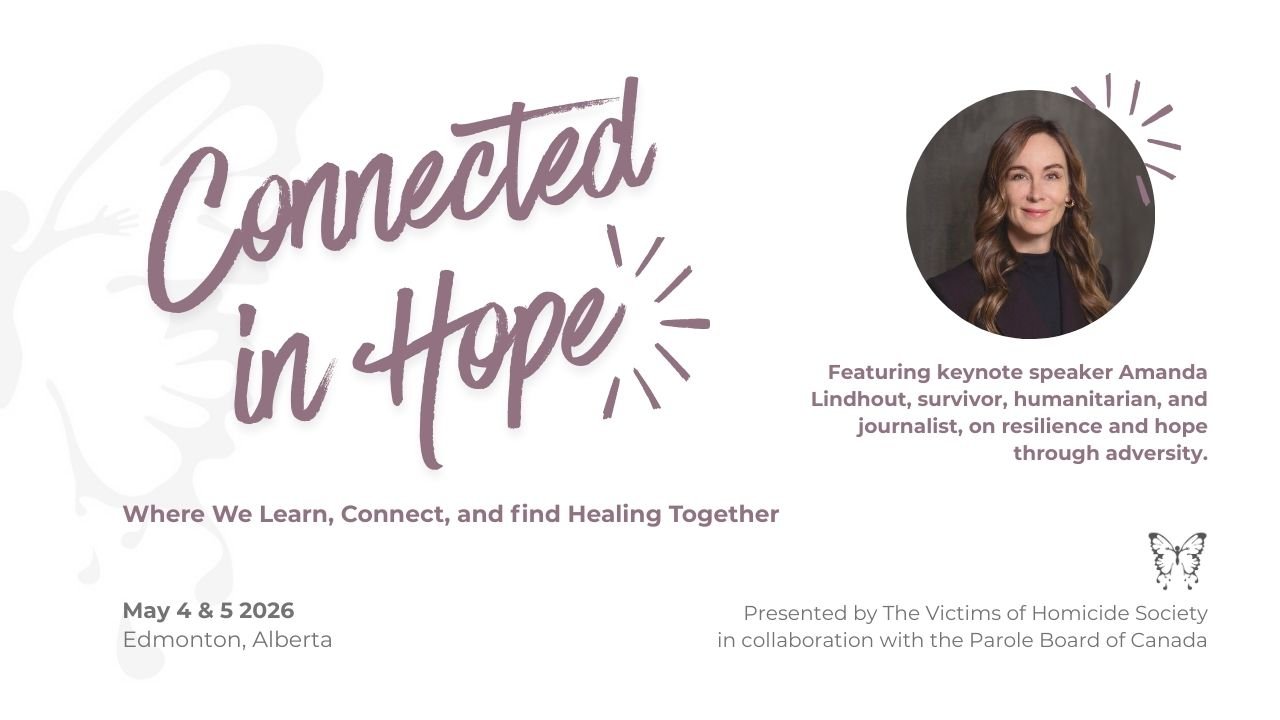
Connected in Hope Conference
Join The Victims of Homicide Society (VOH) and the Parole Board of Canada for a transformative day bringing together co-victims of homicide, police investigators, victim services, EMS, firefighters, and funeral directors.
Why Attend?
This collaborative conference offers three vital components:
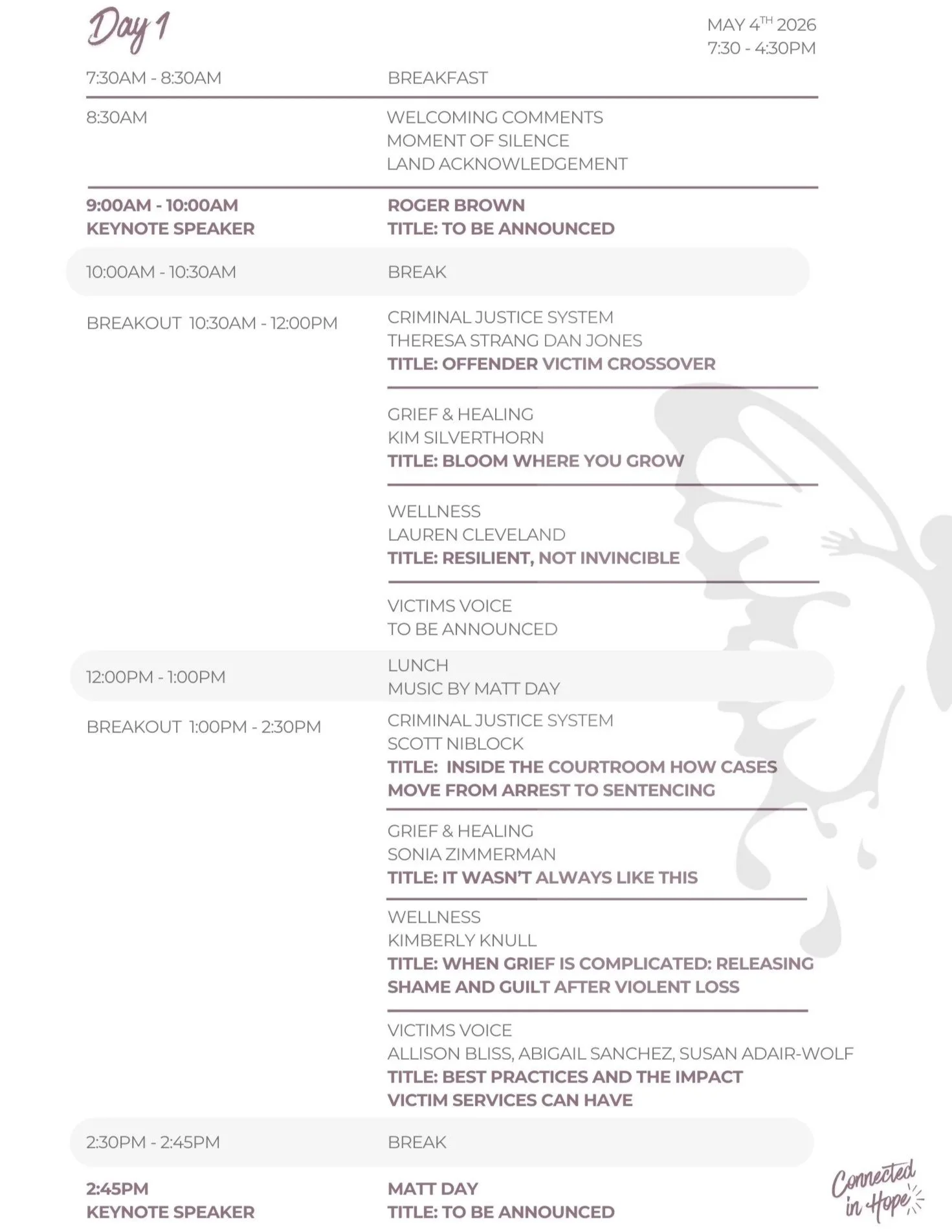
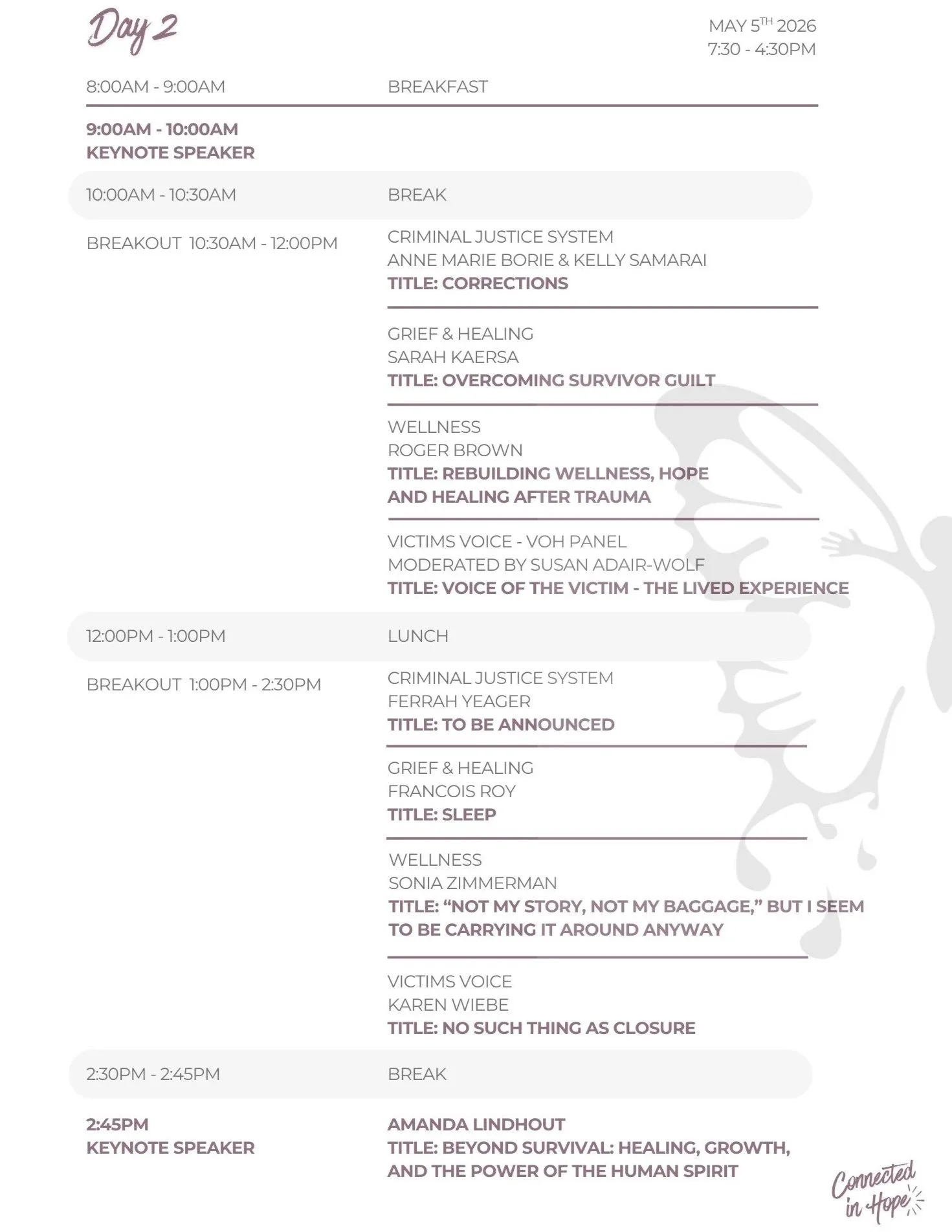
Connection – Meet others who understand your journey. Share experiences with co-victims, first responders, and support professionals in a compassionate environment where every voice matters.
Education – Gain valuable insights into the criminal justice system, trauma-informed care, and victim support services.
Learn from experts and each other to better navigate the path forward.
Wellness – Discover practical tools and strategies for self-care and healing after trauma. Explore new approaches to support yourself and others through grief and loss.
***Featured Keynote Speaker Amanda Lindhout, humanitarian, journalist, and survivor, sharing her extraordinary story of resilience and hope.
Who Should Attend?
• Co-Victims of homicide and their families
• Police investigators and law enforcement
• Victim services professionals
• EMS and firefighters
• Funeral directors
• Anyone supporting those affected by homicide
Together, we'll cultivate hope through shared understanding, meaningful connection, and collective healing.
Join The Victims of Homicide Society (VOH) and the Parole Board of Canada for a transformative day bringing together co-victims of homicide, police investigators, victim services, EMS, firefighters, and funeral directors.
In Person Meeting
Most meetings begin with introductions and each survivor telling of their loss and updating the group on changes. New members as they are ready participate in sharing.
Often there is a topic to begin the group discussion for example a favourite memory of your loved one, managing emotions (anger). Meetings usually involve members own experiences, knowledge and ideas.
Police members are welcomed and will attend to offer support and to answer questions members have about investigations, procedures etc.
Guest speakers occasionally are invited to present and share at meetings.
Acceptance and support are important principles of group support. No one is there to judge your feelings or to persuade you to think differently. Members help each other by sharing their own experiences and insights and allowing others to do the same. No one is there to judge your loved one that has been murdered.
In Person Meeting
Most meetings begin with introductions and each survivor telling of their loss and updating the group on changes. New members as they are ready participate in sharing.
Often there is a topic to begin the group discussion for example a favourite memory of your loved one, managing emotions (anger). Meetings usually involve members own experiences, knowledge and ideas.
Police members are welcomed and will attend to offer support and to answer questions members have about investigations, procedures etc.
Guest speakers occasionally are invited to present and share at meetings.
Acceptance and support are important principles of group support. No one is there to judge your feelings or to persuade you to think differently. Members help each other by sharing their own experiences and insights and allowing others to do the same. No one is there to judge your loved one that has been murdered.
In Person Meeting
Most meetings begin with introductions and each survivor telling of their loss and updating the group on changes. New members as they are ready participate in sharing.
Often there is a topic to begin the group discussion for example a favourite memory of your loved one, managing emotions (anger). Meetings usually involve members own experiences, knowledge and ideas.
Police members are welcomed and will attend to offer support and to answer questions members have about investigations, procedures etc.
Guest speakers occasionally are invited to present and share at meetings.
Acceptance and support are important principles of group support. No one is there to judge your feelings or to persuade you to think differently. Members help each other by sharing their own experiences and insights and allowing others to do the same. No one is there to judge your loved one that has been murdered.
In Person Meeting
Most meetings begin with introductions and each survivor telling of their loss and updating the group on changes. New members as they are ready participate in sharing.
Often there is a topic to begin the group discussion for example a favourite memory of your loved one, managing emotions (anger). Meetings usually involve members own experiences, knowledge and ideas.
Police members are welcomed and will attend to offer support and to answer questions members have about investigations, procedures etc.
Guest speakers occasionally are invited to present and share at meetings.
Acceptance and support are important principles of group support. No one is there to judge your feelings or to persuade you to think differently. Members help each other by sharing their own experiences and insights and allowing others to do the same. No one is there to judge your loved one that has been murdered..
In Person Meeting
Most meetings begin with introductions and each survivor telling of their loss and updating the group on changes. New members as they are ready participate in sharing.
Often there is a topic to begin the group discussion for example a favourite memory of your loved one, managing emotions (anger). Meetings usually involve members own experiences, knowledge and ideas.
Police members are welcomed and will attend to offer support and to answer questions members have about investigations, procedures etc.
Guest speakers occasionally are invited to present and share at meetings.
Acceptance and support are important principles of group support. No one is there to judge your feelings or to persuade you to think differently. Members help each other by sharing their own experiences and insights and allowing others to do the same. No one is there to judge your loved one that has been murdered.
In Person Meeting
Most meetings begin with introductions and each survivor telling of their loss and updating the group on changes. New members as they are ready participate in sharing.
Often there is a topic to begin the group discussion for example a favourite memory of your loved one, managing emotions (anger). Meetings usually involve members own experiences, knowledge and ideas.
Police members are welcomed and will attend to offer support and to answer questions members have about investigations, procedures etc.
Guest speakers occasionally are invited to present and share at meetings.
Acceptance and support are important principles of group support. No one is there to judge your feelings or to persuade you to think differently. Members help each other by sharing their own experiences and insights and allowing others to do the same. No one is there to judge your loved one that has been murdered.

In Person Meeting
Most meetings begin with introductions and each survivor telling of their loss and updating the group on changes. New members as they are ready participate in sharing.
Often there is a topic to guide discussion, such as the criminal legal system (e.g. questions about investigations, understanding specific legal terms), favourite memories, managing anger, etc. Usually meetings revolve around members' own knowledge and experiences. Guest speakers are invited to present information at some meetings.
Acceptance and support are important principles of group support. No one is there to judge your feelings or to persuade you to think differently. Members help each other by sharing their own experiences and insights and allowing others to do the same. No one is there to judge your loved one that has been murdered.